
Free coffee shop inventory spreadsheet
A ready-made inventory sheet for a coffee shop: twenty items most cafés stock, with the unit to count in, the pack size and a starting par level. Open it in Excel or Google Sheets and adjust it to your shop.
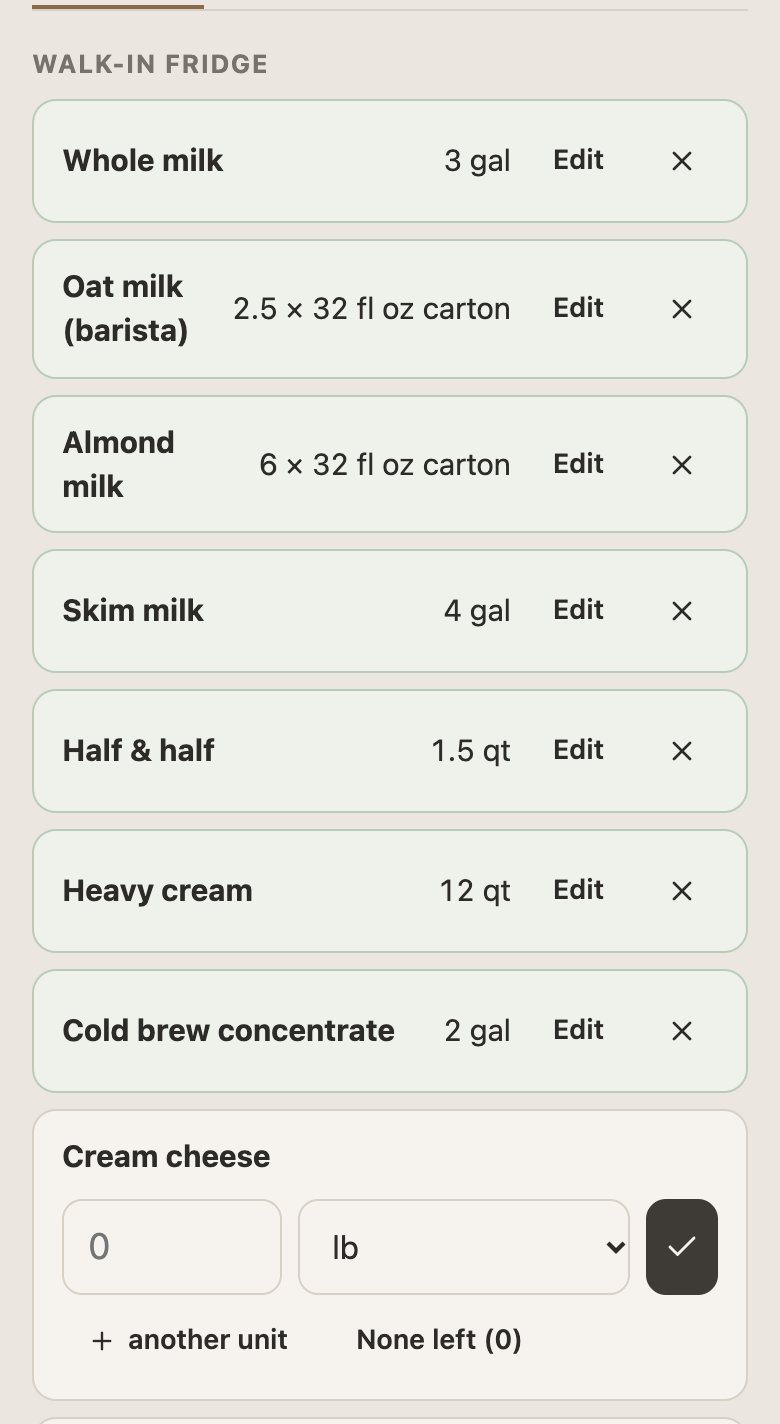
What's in the template
| Category | Item | Count in | Pack | Par |
|---|---|---|---|---|
| Coffee | Espresso beans | bag | 5 lb | 4 |
| Coffee | Decaf beans | bag | 2 lb | 1 |
| Coffee | Cold brew coarse grind | bag | 5 lb | 2 |
| Dairy | Whole milk | gal | 1 gal | 12 |
| Dairy | Oat milk | carton | 32 fl oz | 12 |
| Dairy | Almond milk | carton | 32 fl oz | 6 |
| Dairy | Half and half | qt | 1 qt | 4 |
| Syrups | Vanilla syrup | bottle | 750 ml | 3 |
| Syrups | Caramel syrup | bottle | 750 ml | 2 |
| Syrups | Chocolate sauce | bottle | 64 oz | 1 |
| Tea | Matcha powder | bag | 1 lb | 1 |
| Tea | Chai concentrate | carton | 32 fl oz | 4 |
| Cups | Hot cups 12 oz | sleeve | 50 pcs | 6 |
| Cups | Hot cups 16 oz | sleeve | 50 pcs | 6 |
| Cups | Hot lids 12/16 oz | sleeve | 100 pcs | 6 |
| Cups | Cold cups 16 oz | sleeve | 50 pcs | 4 |
| Cups | Straws | box | 500 pcs | 1 |
| Food | Croissants | pcs | 1 | 24 |
| Food | Muffins | pcs | 1 | 12 |
| Supplies | Napkins | pack | 500 pcs | 2 |
Columns in the file: Category, Item, Count unit, Pack size, Par level, On hand, Unit cost, Value, Order qty. Par levels are a starting point for a café selling about 100 drinks a day with deliveries twice a week — replace them with your own once you know your weekly usage.
How to count a coffee shop
Same time, same order
Count before opening or after close, when nothing is moving. Walk the shop in the same order every time — fridge, back shelf, bar, front — and keep the sheet in that order.
Count what's printed on the box
Count milk in cartons and gallons, beans in bags, cups in sleeves. Open packs as a fraction: half a bag is 0.5. Convert to grams and ounces later, not at the shelf.
Weekly for the fast stuff
Milk, beans, syrups, cups and pastries every week; cleaning supplies and napkins monthly. A count that takes more than 15 minutes won't happen.
Turning counts into numbers
Usage = last count + what you received − this count. If you had 10 cartons of oat milk, received 24 and now have 12, you used 22 this week.
Value on hand = on hand × unit cost. Add it up for the inventory value on your balance sheet.
Order quantity = par level − on hand, rounded up to whole packs.
Food cost % = (beginning inventory + purchases − ending inventory) ÷ sales. Our food cost guide walks through it with real numbers.
When the spreadsheet stops working
A sheet tells you what you have. It can't tell you what you should have — that takes your sales and recipes. Most cafés outgrow it when they want to know where the milk went, what a latte really costs, or want the order list written for them.
ShelfMule does those three things: stock comes off by recipe from your Square or Clover sales, staff count on their phones, and the shopping list builds itself. See how it works.
Questions
How do you do inventory for a coffee shop?
Count every item at the same time each week, in the units printed on the package, walking the shop in a fixed order. Then work out usage (last count + received − this count) and compare it with what your sales say you should have used.
What should be on a coffee shop inventory list?
Beans (regular, decaf, cold brew), every milk and alternative milk, syrups and sauces, tea and matcha, cups, lids, sleeves and straws by size, pastries and food, and supplies like napkins. The template above has twenty common items to start from.
How often should a café take inventory?
Weekly for fast, expensive items — milk, beans, syrups, cups, pastries — and monthly for everything else.
Is the template free?
Yes. It's a CSV file that opens in Excel, Google Sheets or Numbers. No sign-up.
Count less. Know more.
Connect your POS, add your stock items, do your first count — about an hour, and the numbers start working for you the same evening. From $59/month, no contract.